
The Challenge
Building a Cal.com clone that can handle thousands of users while keeping monthly costs under $50 required careful architecture decisions and strategic use of serverless technologies. Traditional approaches with always-on servers would cost hundreds of dollars per month. The solution: a completely serverless architecture.
Architecture Decisions
The system uses a serverless-first approach:
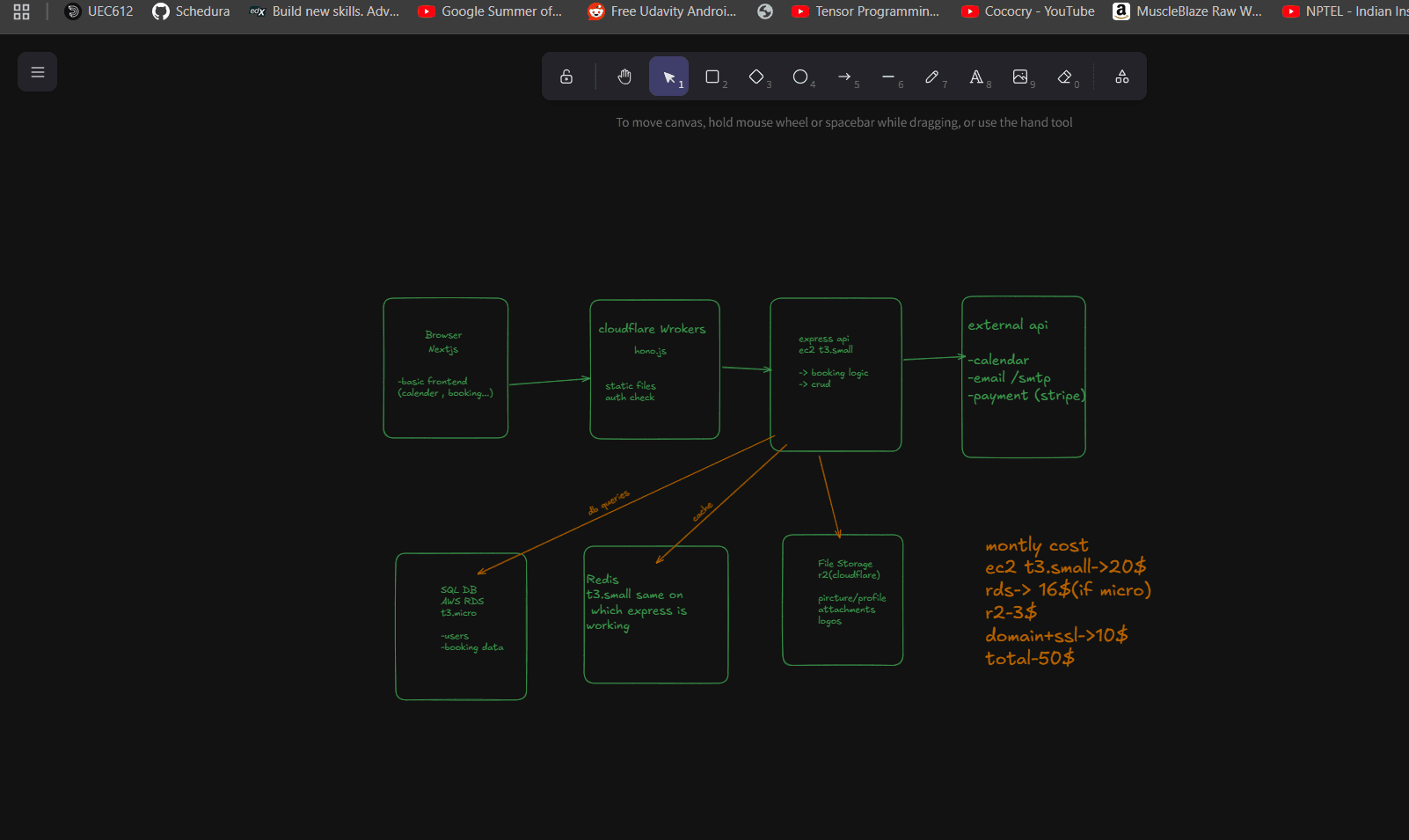
- Cloudflare Workers for edge computing - handles API requests globally
- Cloudflare D1 for database storage - SQLite at the edge with replication
- Cloudflare Queues for background job processing
- Cloudflare R2 for file storage - S3-compatible object storage
- Cloudflare Pages for frontend hosting - static site with edge functions
Key Features Implemented
The platform includes:
- User authentication and authorization
- Calendar scheduling with timezone support
- Email notifications via Cloudflare Email Workers
- Webhook integrations for third-party services
- Real-time availability checking
- Booking management and cancellation
Cost Breakdown
Monthly costs breakdown:
- Cloudflare Workers: $5 (free tier covers most usage)
- Cloudflare D1: $5 (first 5M reads free)
- Cloudflare R2: $5 (first 10GB free)
- Cloudflare Email: $10 (email delivery)
- Domain and DNS: $1
- Total: ~$26/month for moderate traffic
Performance
Despite the low cost, the system performs excellently:
- Sub-100ms response times globally
- Handles 10,000+ requests per day
- 99.9% uptime with Cloudflare's infrastructure
- Automatic scaling with no configuration needed
Lessons Learned
Key insights from building this:
- Serverless can be incredibly cost-effective for the right use cases
- Edge computing eliminates the need for regional deployments
- Free tiers go a long way for moderate traffic applications
- Architecture decisions have huge cost implications