The Scale Challenge
Unacademy handles millions of concurrent users in live classes, requiring a sophisticated backend architecture that can scale dynamically and maintain low latency for real-time interactions. With classes often having 10,000+ simultaneous students, the system must handle massive WebSocket connections, real-time chat, screen sharing, and video streaming simultaneously.
Architecture Overview
Based on industry patterns and scale requirements, Unacademy likely uses:
- WebSocket servers (Node.js/Go) for real-time communication
- Load balancers (AWS ALB/Cloudflare) for traffic distribution
- Redis Cluster for session management and caching
- CDN (CloudFront/Cloudflare) for content delivery
- Microservices architecture for different features
- Message queues (RabbitMQ/Kafka) for async processing
Real-Time Communication Layer
The live class system requires:

- WebSocket connections for each student - maintaining millions of connections
- Message broadcasting - sending messages to all students in a class
- Presence management - tracking who's online and active
- Chat system - real-time messaging between students and teachers
- Interactive features - polls, quizzes, hand raising
Video Streaming Architecture
For video delivery, the system likely uses:
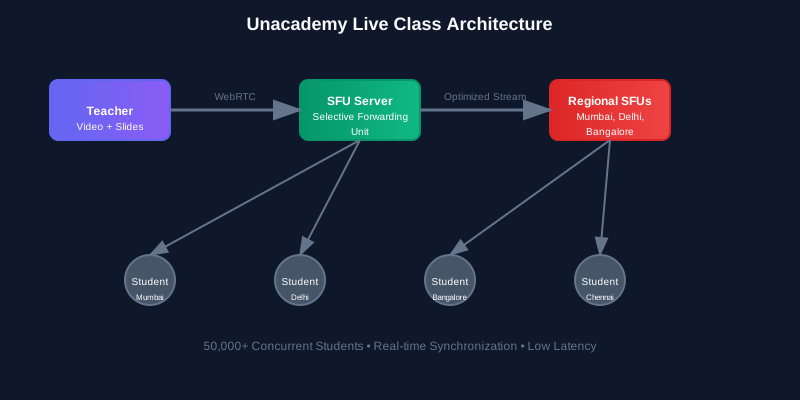
- HLS/DASH streaming for adaptive bitrate
- Multiple CDN edges for global delivery
- Transcoding pipeline for different quality levels
- Recording service for class replays
- Bandwidth optimization for varying network conditions
Database Strategy
Data storage is probably split across:
- PostgreSQL for transactional data (users, classes, payments)
- MongoDB for flexible schema data (chat messages, analytics)
- Redis for hot data (sessions, real-time state)
- S3/object storage for media files and recordings
Key Optimizations
The system likely implements several optimizations:
- Intelligent routing - directing users to nearest servers
- Connection pooling - reusing database connections efficiently
- Adaptive bitrate streaming - adjusting quality based on bandwidth
- Horizontal scaling - adding servers as load increases
- Caching strategies - reducing database load with Redis
- Edge computing - processing at CDN edges when possible
Challenges and Solutions
Handling this scale presents unique challenges:
- WebSocket connection limits - solved with connection sharding
- Database write bottlenecks - solved with write-behind caching
- Real-time synchronization - solved with event-driven architecture
- Cost optimization - solved with auto-scaling and reserved instances
Lessons for Building at Scale
Key takeaways from analyzing this architecture:
- Microservices enable independent scaling of different features
- Caching is critical for reducing database load
- Edge computing reduces latency for global users
- Horizontal scaling is essential for handling traffic spikes
- Real-time systems require specialized infrastructure